Battery Pack Design & Assembly
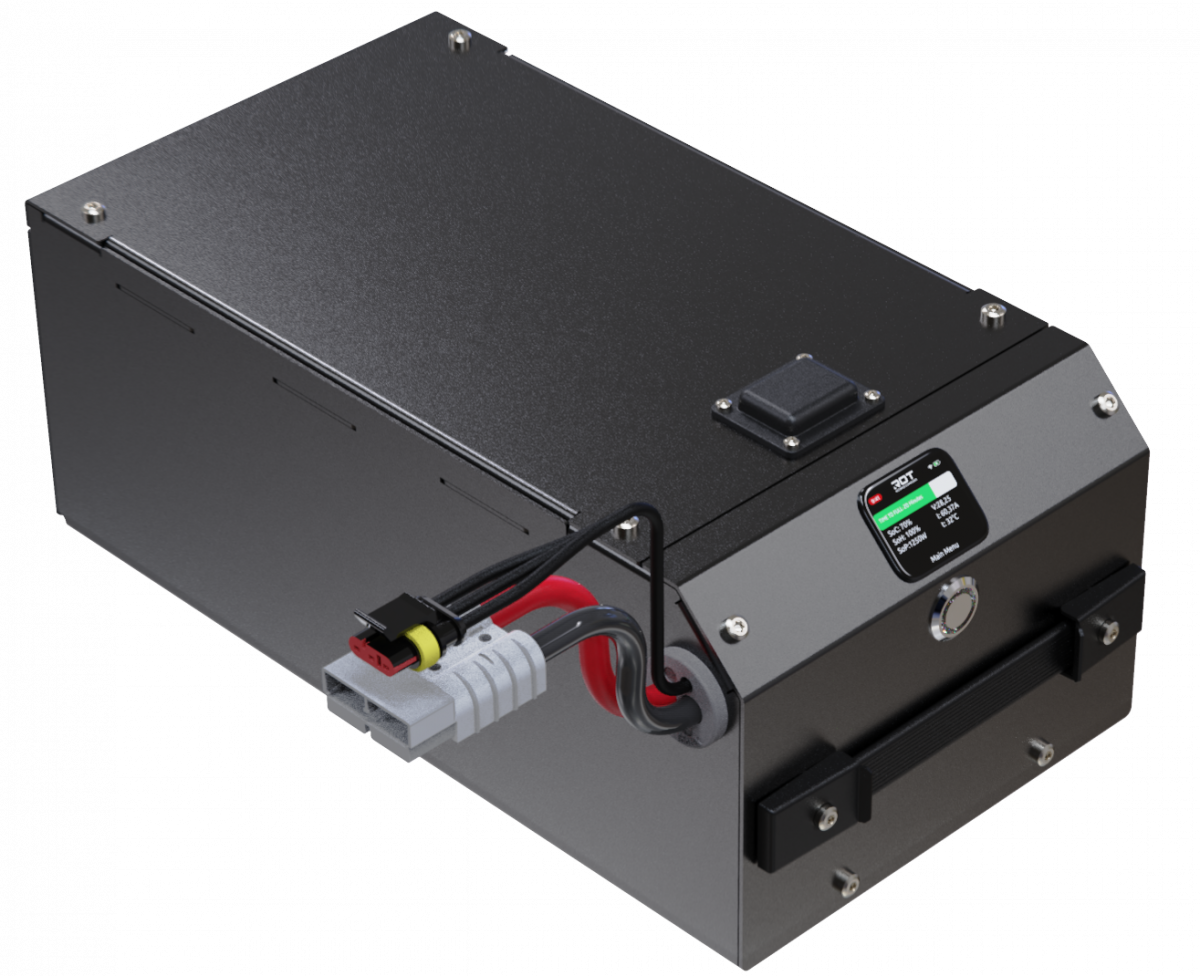
From cell selection to a finished, tested pack — we design and assemble custom battery packs in-house for any cell chemistry, including mechanical and thermal design, BMS integration, and production-grade spot and laser welding.
What is our task?
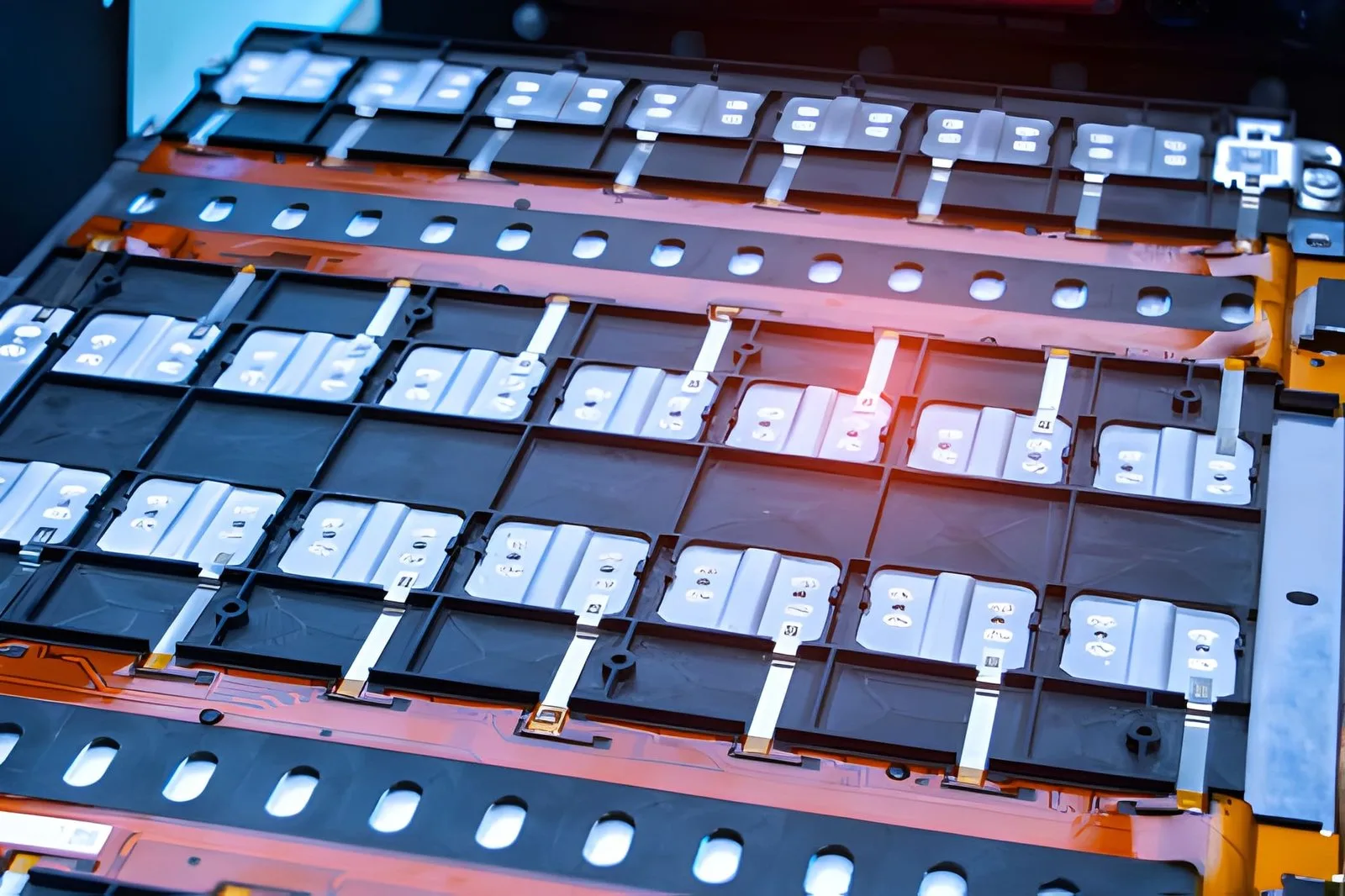
We take battery packs from requirement to reality. Starting with your voltage, capacity, duty-cycle and form-factor targets, we define the pack architecture, select the right cells for your chemistry, and design the mechanical enclosure, thermal path and electrical interconnects as one integrated system.
Every pack is built around our own smart BMS, giving you cell balancing, protection and State-of-X monitoring out of the box — and as the exclusive distributor of LithiumWerks cells, we build on chemistry we know cell-by-cell.
In-house welding capabilities
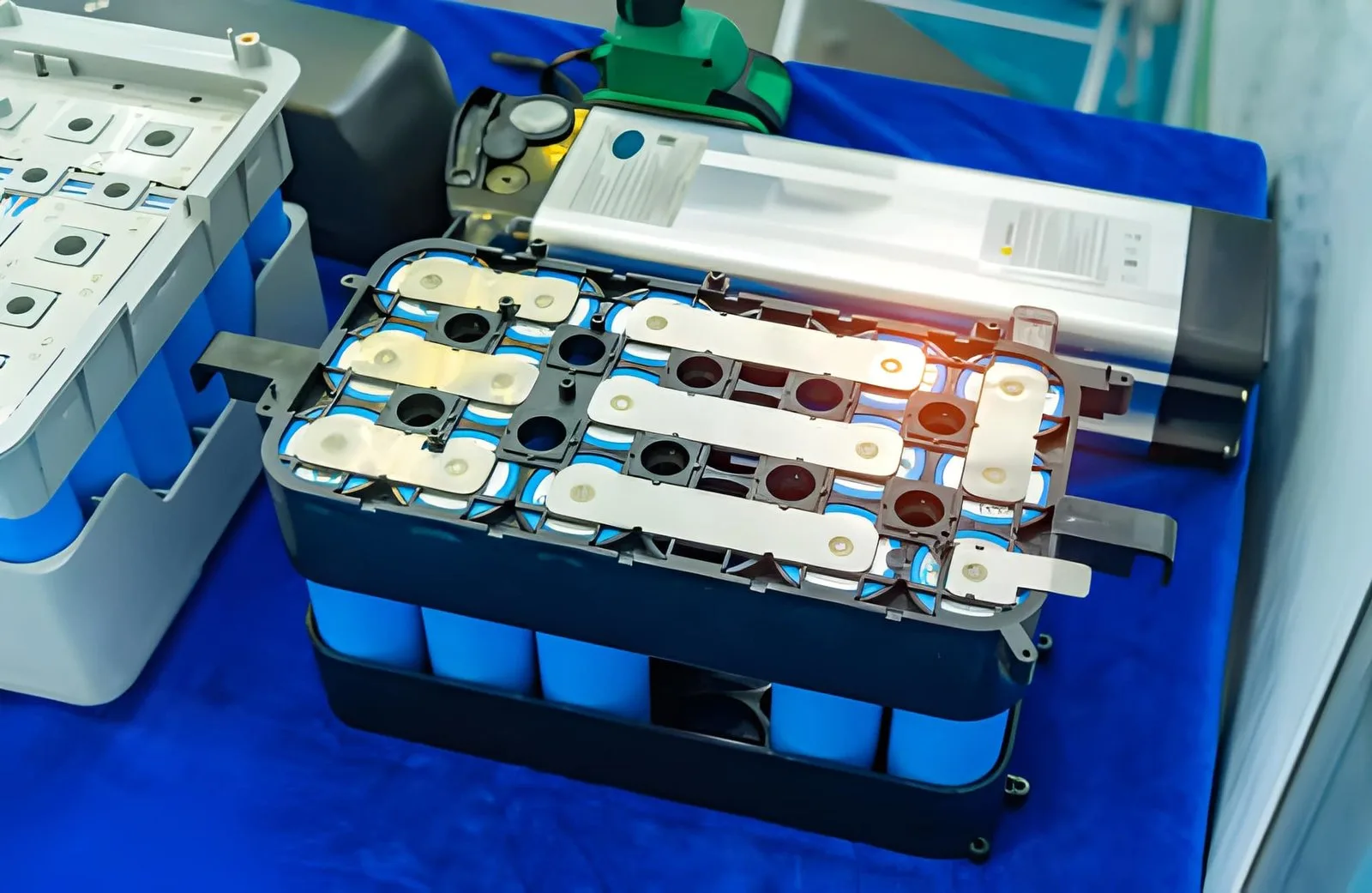
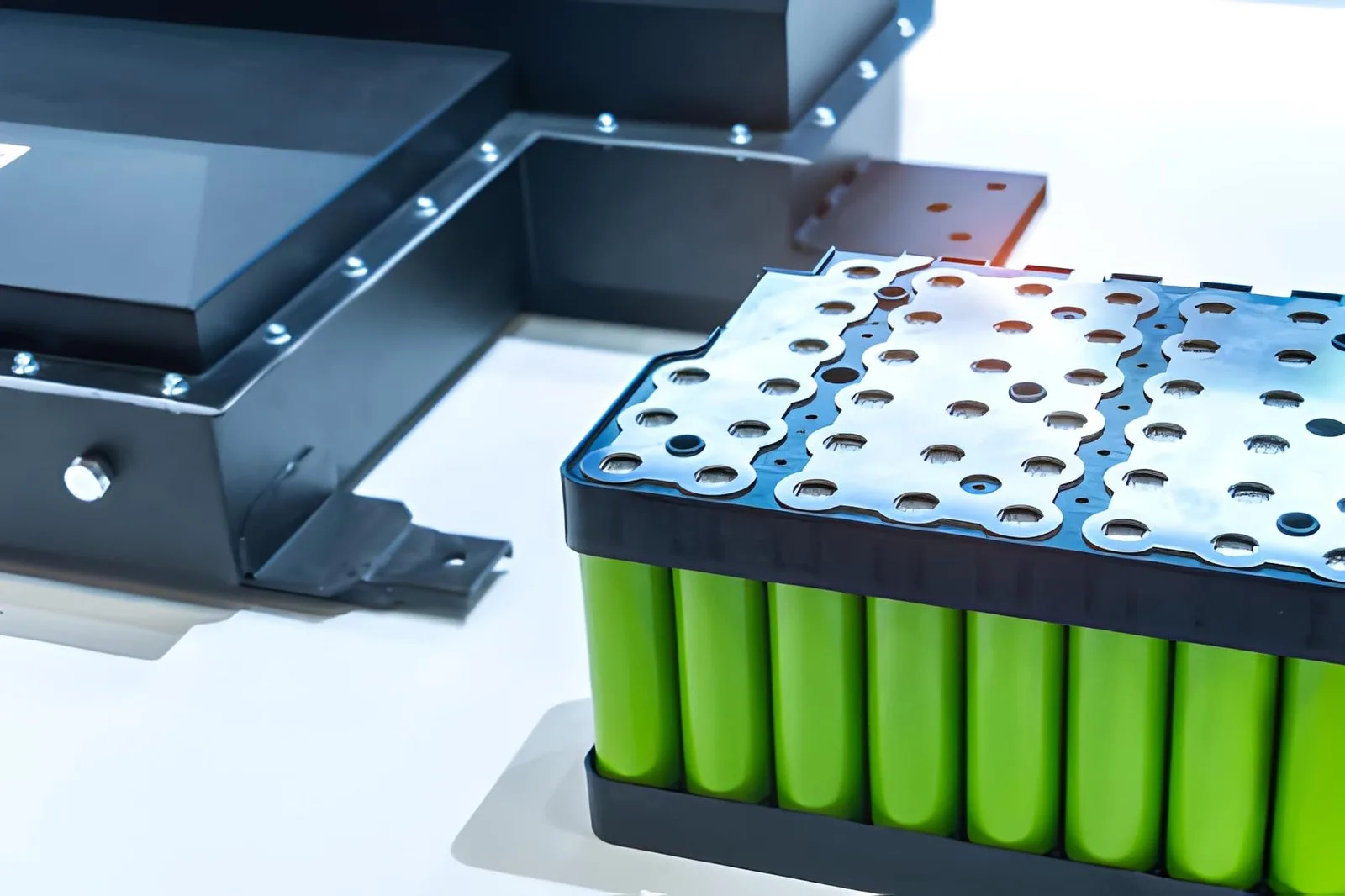
Cell interconnection is where pack quality is won or lost, so we keep it in-house. Our resistance spot-welding line joins nickel strip to cylindrical cells with controlled energy and repeatable weld quality — ideal for 18650, 26650 and 32140 formats.
For high-current joints, busbars and terminal connections we use laser welding: a low-heat, non-contact process that delivers precise, consistent, high-strength welds without stressing the cells. Together, the two processes let us move from prototype packs to production assembly without changing suppliers.
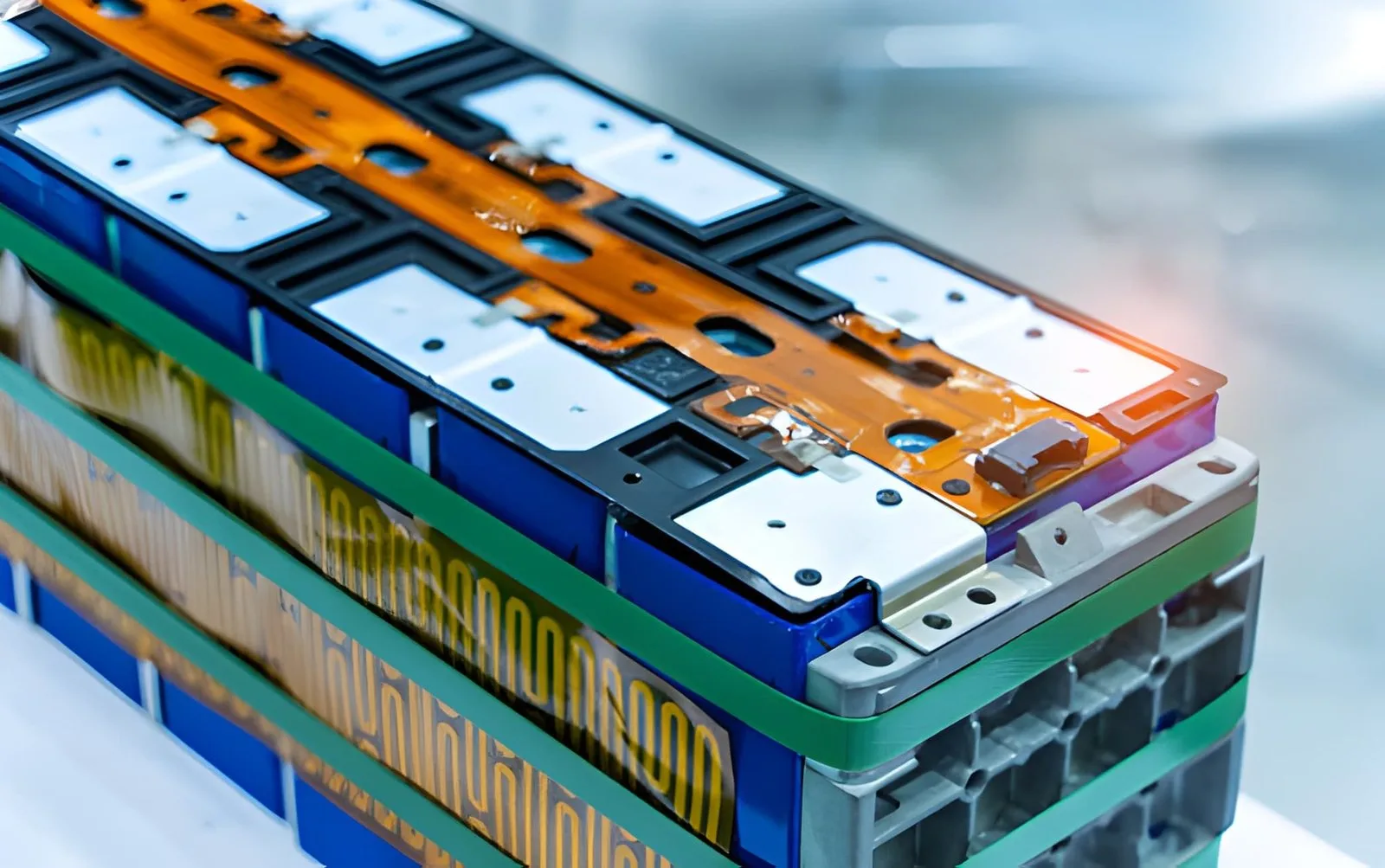
Inside the pack shop
What’s included
Pack Architecture & Cell Selection
Series/parallel topology, energy and power budgeting, and cell selection across any chemistry and format — cylindrical, prismatic or pouch — matched to your voltage window, capacity and lifetime targets.
Mechanical & Thermal Design
Enclosure design, cell retention, vibration resistance and the thermal path — engineered with the electronics, not after them, and prepared for manufacturing from day one.
BMS Integration
Our ROT smart BMS family integrates natively: cell balancing, protection, CAN/RS-485 communication and State-of-X monitoring, configured for your pack.
Spot Welding
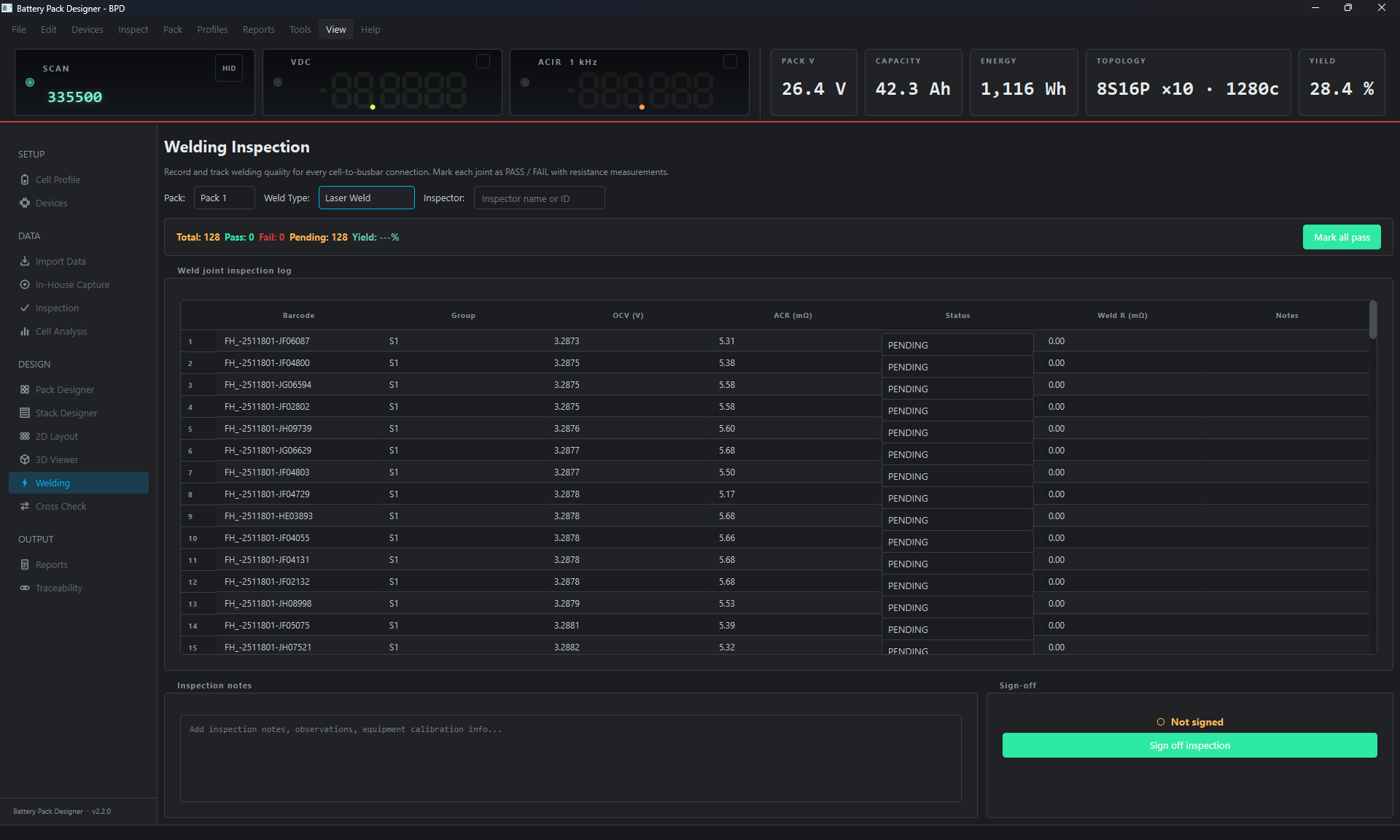
In-house resistance spot welding for cell-to-nickel interconnects — controlled weld energy, repeatable quality and clean joints across cylindrical cell formats.
Laser Welding
Precision laser welding for busbars, terminals and high-current connections — low heat input, non-contact, and consistent penetration for production-grade reliability.
Prototyping, Testing & EOL
Prototype builds, capacity and cycle verification, and end-of-line electrical testing with documentation — so every pack that ships is a pack we’ve measured.
Red Origin Battery Pack Designer
An internal engineering desktop application for designing, building and certifying lithium battery packs from real cell-measurement data.
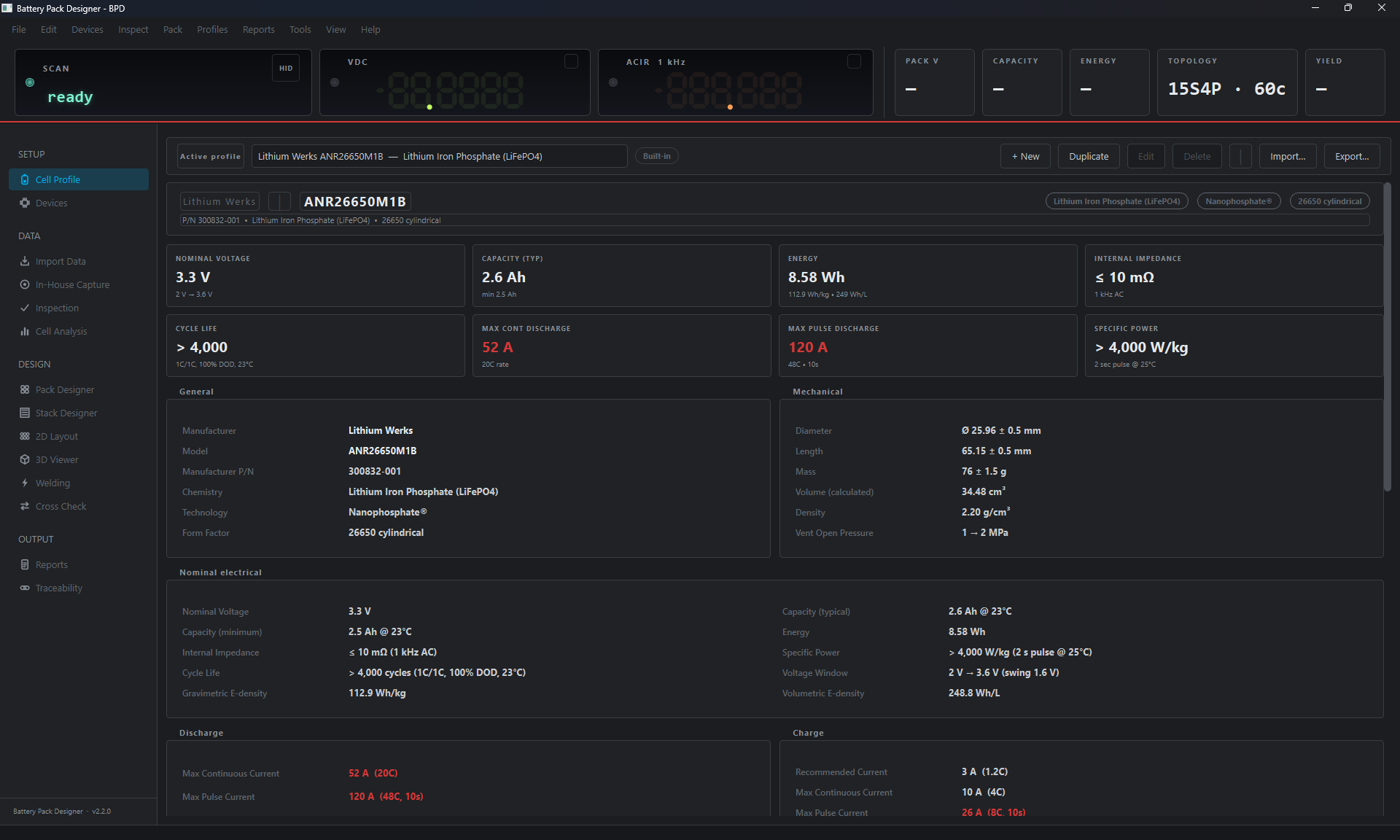
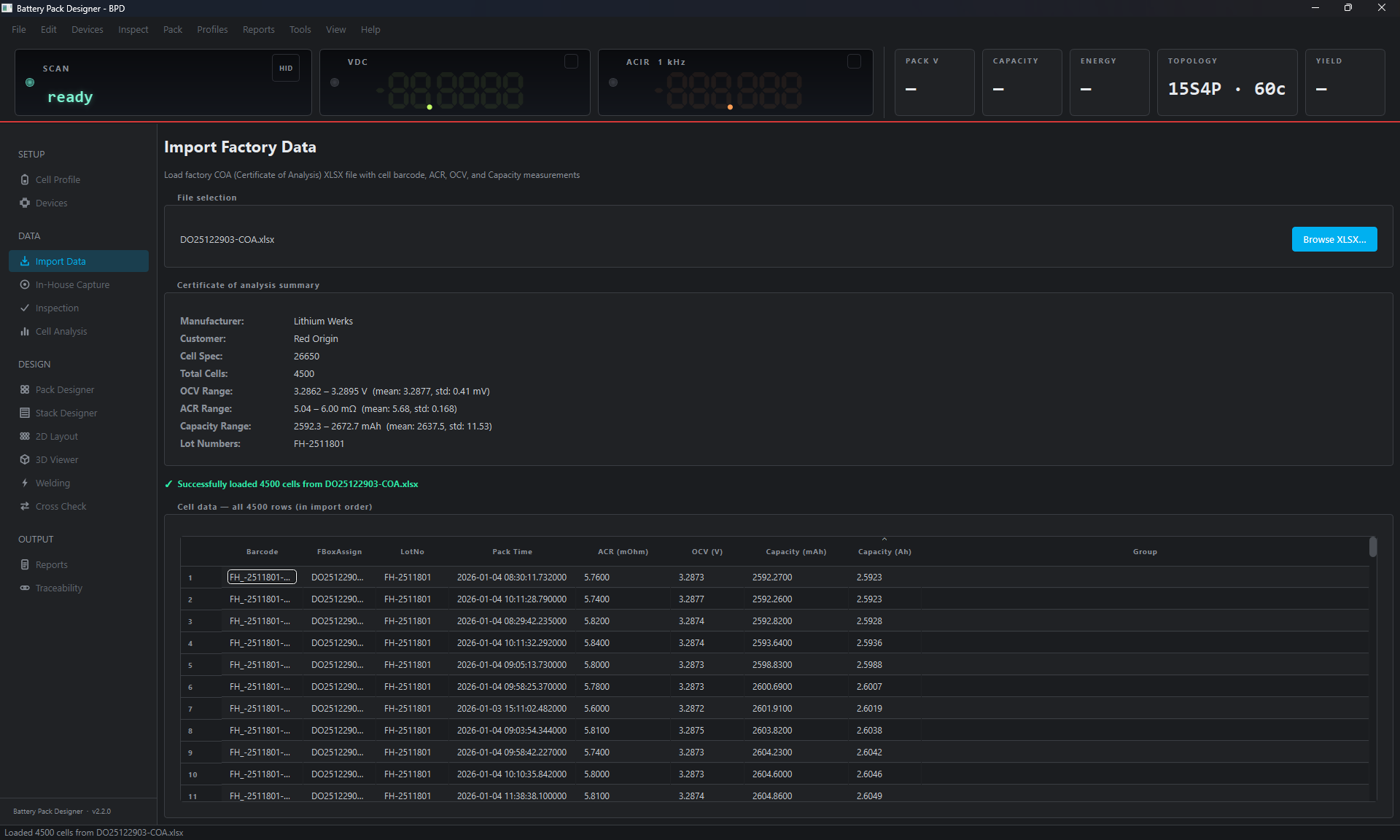
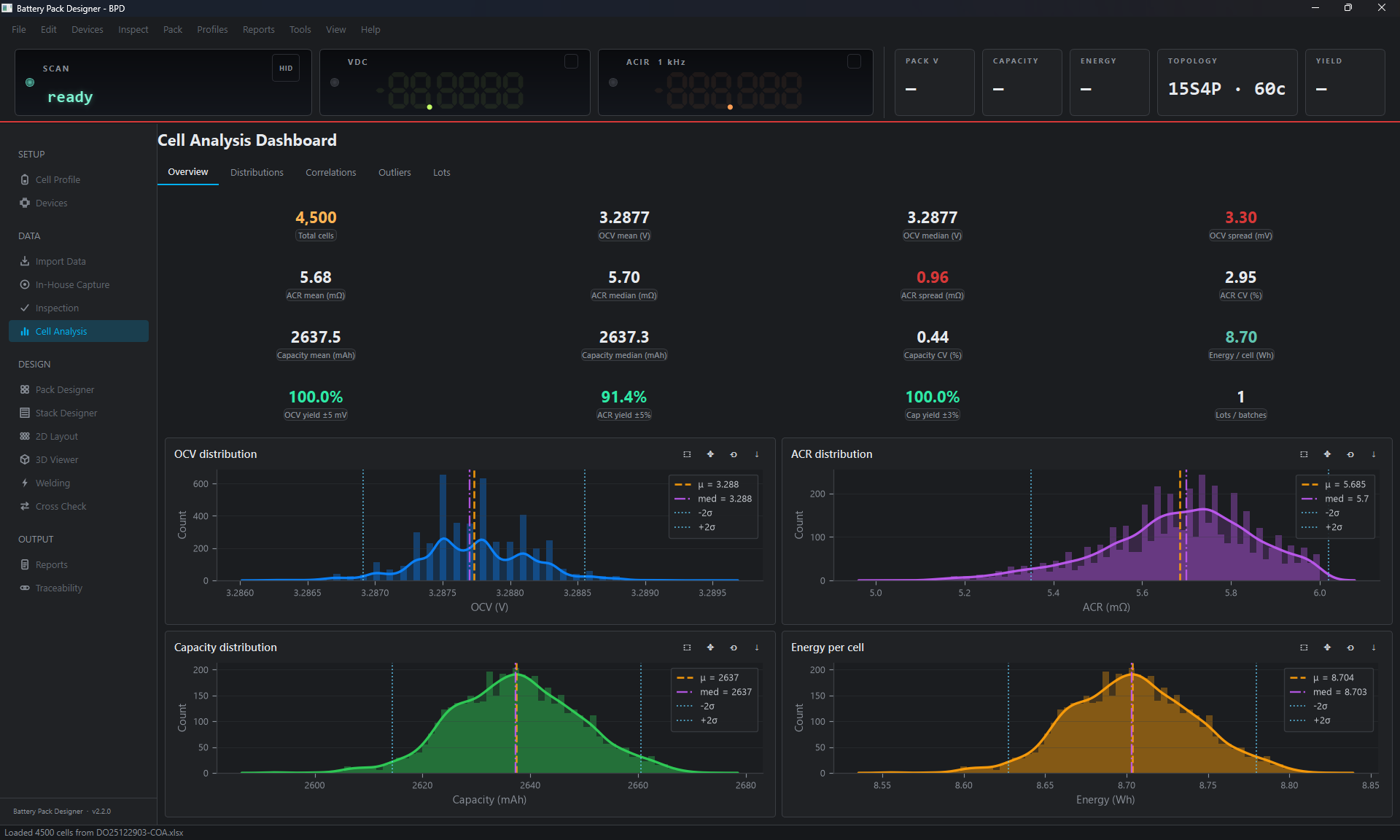
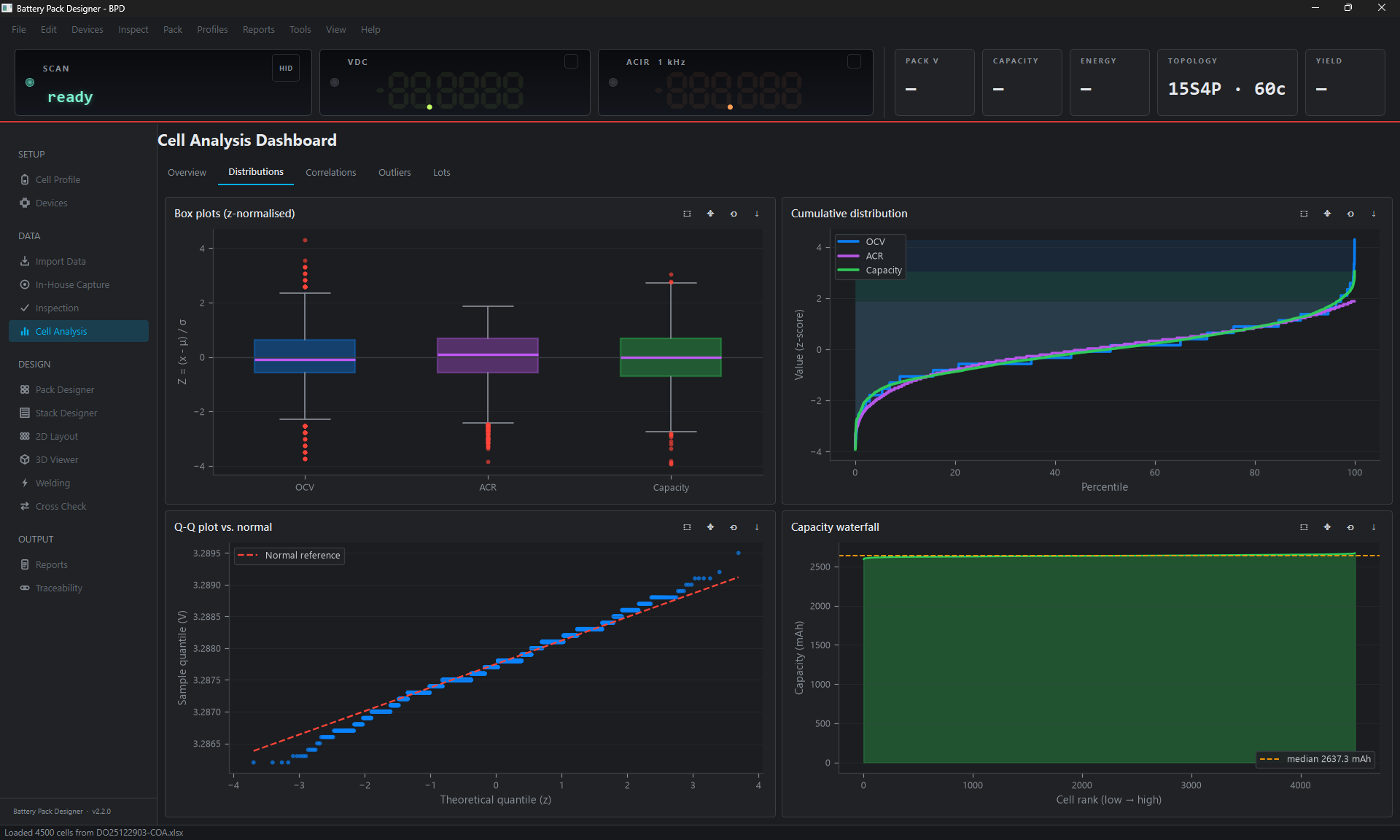
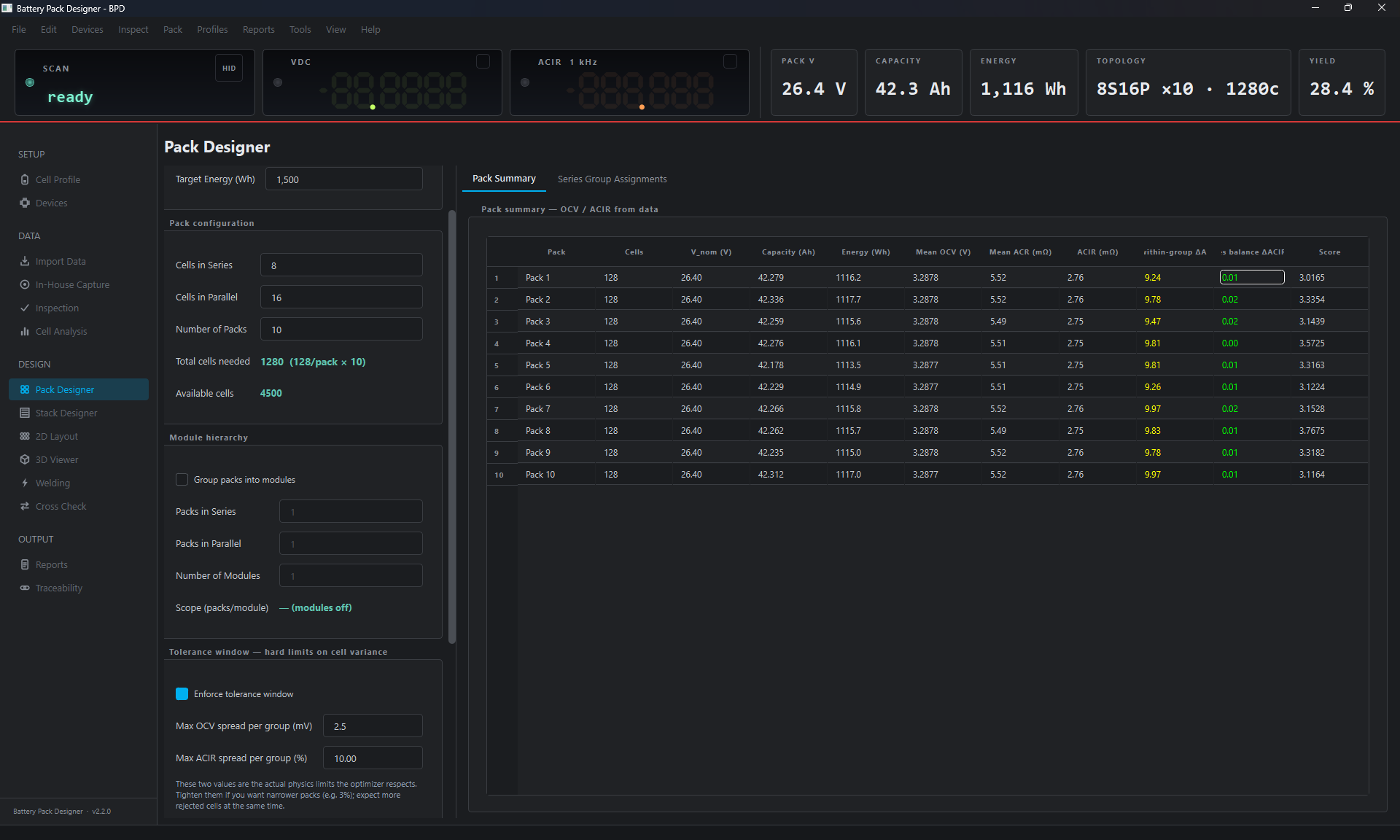
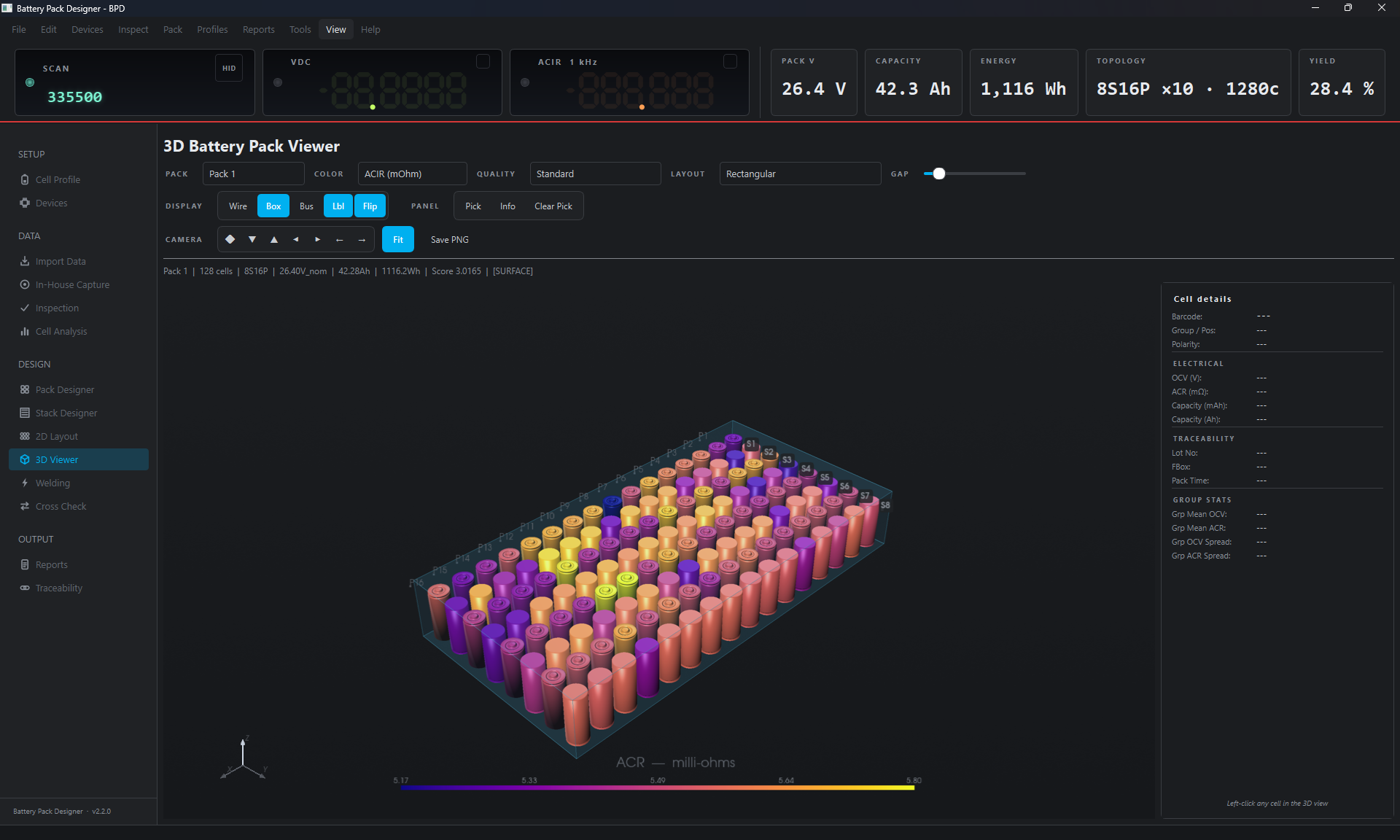
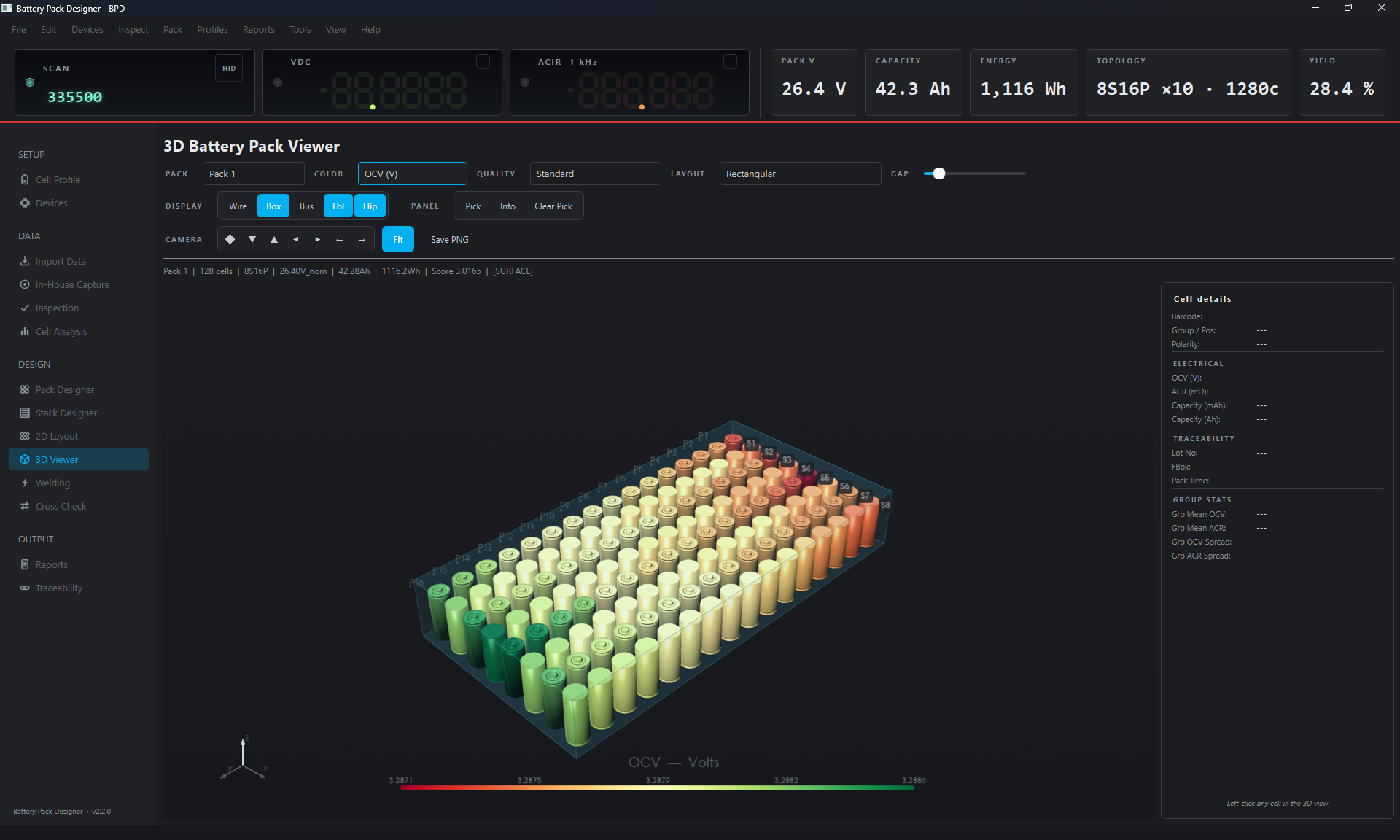
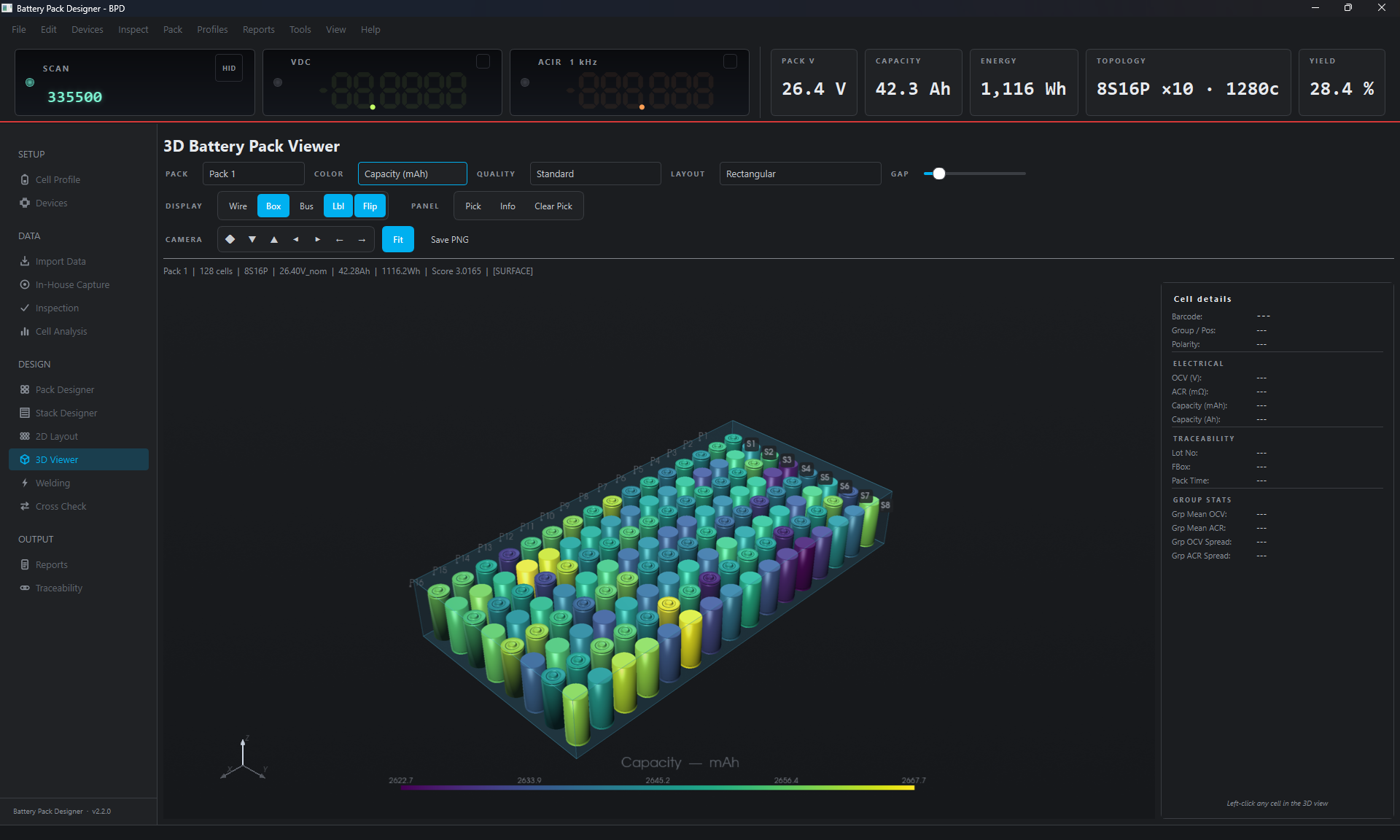
Rather than assuming every cell is identical, the app works from per-cell electrical measurements — open-circuit voltage, AC internal resistance and capacity — and optimally arranges real cells into packs so parallel groups are well-balanced. That maximises pack life, safety and yield, and every cell stays traceable from incoming inspection to finished pack.
From cell to certified pack
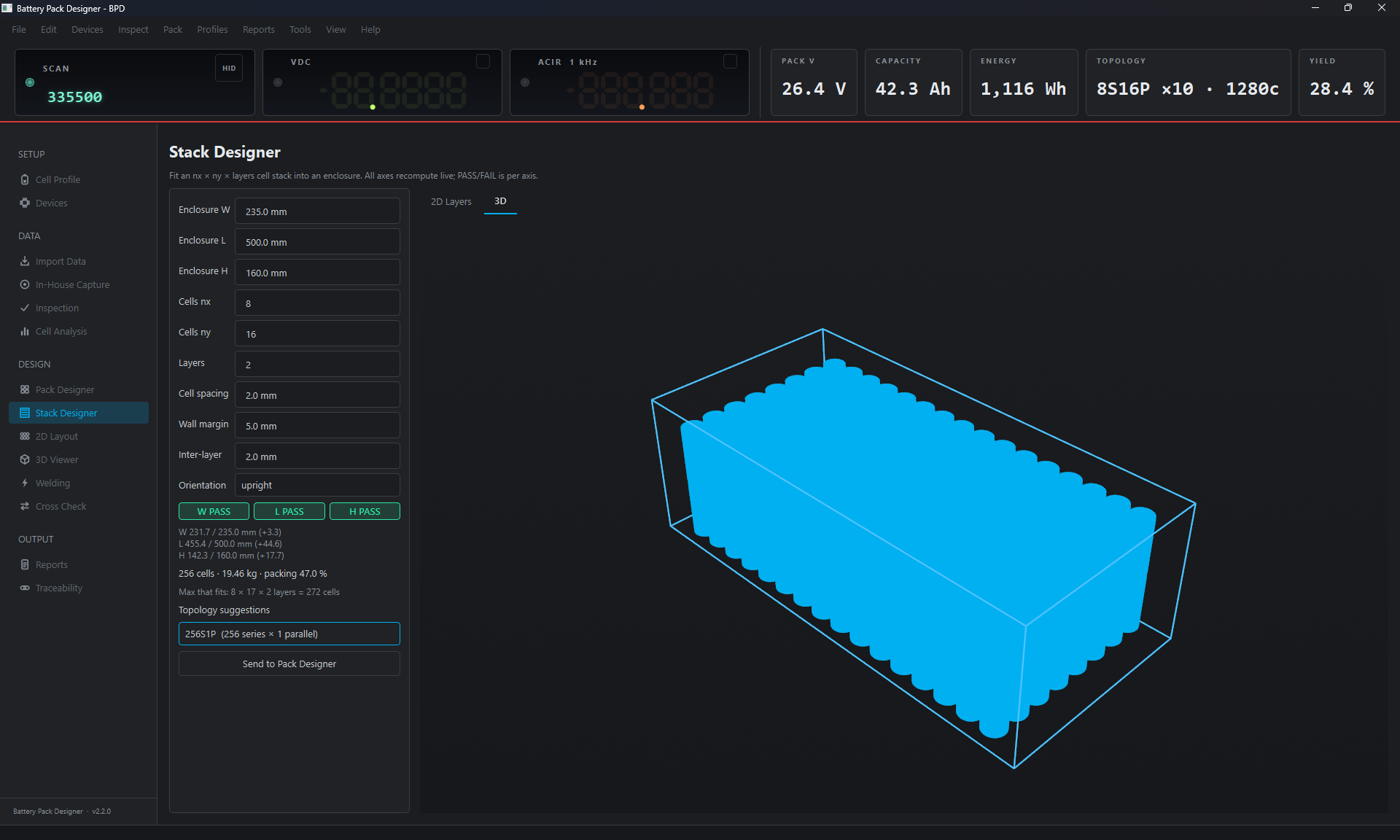
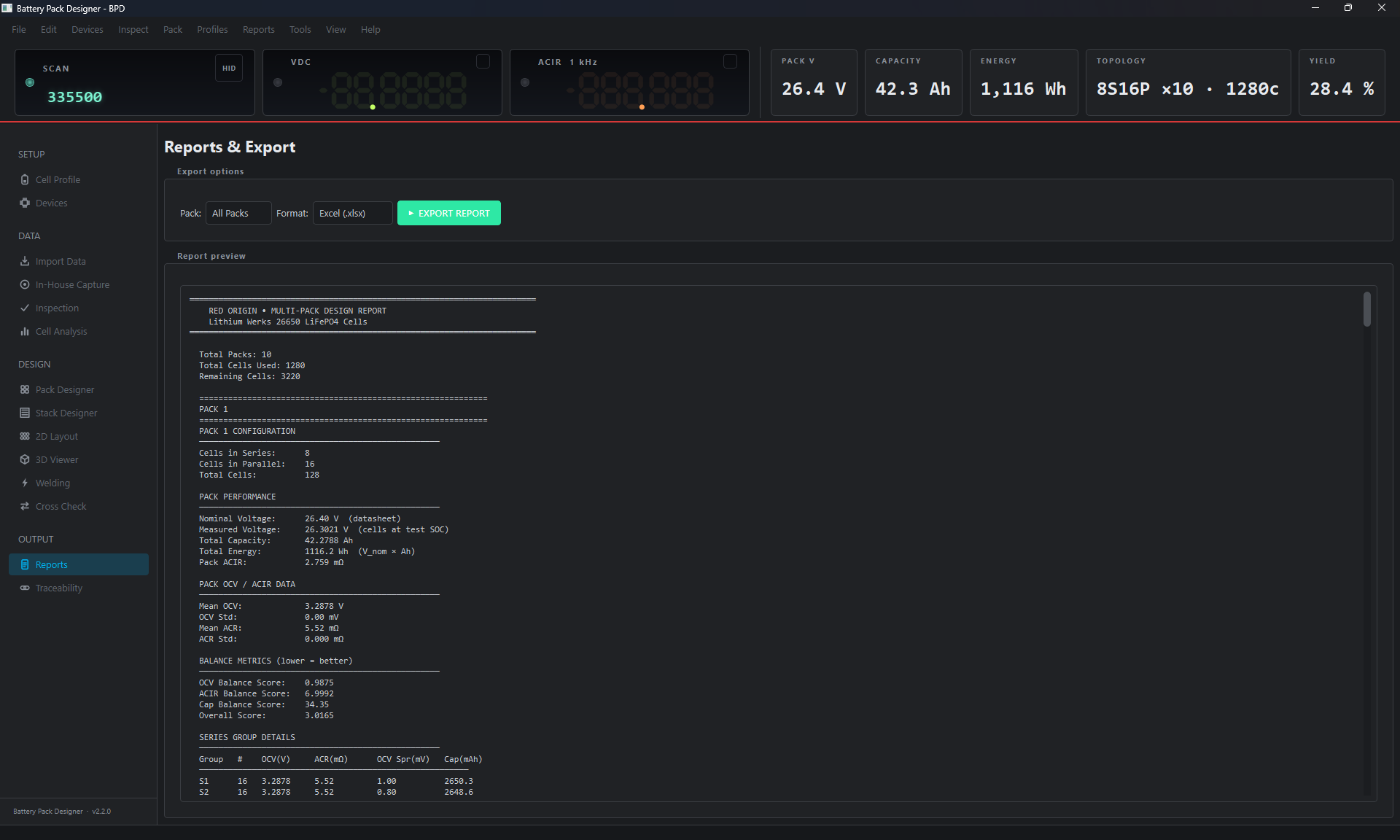
The left-sidebar flow, step by step — pick a step to preview its panel.
How it’s built
Reactive state bus
A process-wide design-state object lets every panel share the current design intent and update live.
Traceability ledger
An append-only database log records every incoming scan, pack build and event; projects save to a self-contained .rbpd file.
Hardware layer
Talks to the battery tester (SCPI / Modbus) and the barcode / QR scanner (HID / serial) over standard COM ports.
Background workers
Heavy operations — import, optimisation, PDF export — run off the UI thread with a live progress indicator.












Frequently Asked Questions
Read this information to better understand how we design and assemble battery packs.
What communication tools do you utilize to facilitate collaboration between your team and clients?
Most of the time we use emails, Google Meet and Teams for regular communication and video calls. For project management, we use Jira, Redmine, and Basecamp. If there is any specific software that you prefer, just let us know. We’re flexible when it comes to communication.
Can I use the code from one of your case studies to expedite the development of my solution?
We respect our clients’ intellectual property rights and do not reuse any previously developed software code or hardware components. However, our experience enables us to develop similar projects faster and more efficiently while maintaining the confidentiality and security of our clients’ intellectual property.
Who owns intellectual property rights of the software that’s being developed?
We recognize that the ownership of the software and hardware developed during our engagement is an important consideration for our clients. Therefore, the ownership of the software and hardware will be determined by the terms and conditions agreed upon at the commencement of our partnership.
Upon the successful completion of all services and the receipt of payment for our work, we will transfer the ownership of the developed software and hardware to our clients as per the mutually agreed-upon terms. Our commitment to transparency and ethical business practices ensures that our clients have complete ownership of the developed software and hardware upon the completion of the project, subject to the agreed-upon terms and conditions.
Will the project manager be able to communicate in English?
Yes, our project managers and engineers communicate in English efficiently. We regularly do video calls with our clients and our entire team. You also get to talk to everybody involved in the project via group and individual chats.
How long does your typical project last?
Our average projects last for about 3-4 months, but we also have projects which we’ve been working on for one and even three years.
How do you protect my IP rights?
As a prominent hardware and software development company, we have invested significant efforts in establishing our clientele and building a reputable brand. It would be imprudent of us to compromise our hard-earned standing by engaging in any act of intellectual property theft.
Moreover, we understand the value of time and resources required for implementing a project, and given our existing engagements with clients, we cannot afford to divert them towards any other undertaking. Therefore, rest assured that we are committed to delivering high-quality services to our clients while adhering to ethical practices.
To reinforce our commitment to safeguarding our clients’ confidential information, we strictly adhere to a non-disclosure agreement (NDA) before discussing any project details. The NDA is a legal document that ensures the confidentiality of all project-related information shared by our clients.
Furthermore, once we provide a rough estimate of the project and mutually agree to move forward, we sign a comprehensive legal agreement with our clients that outlines all terms and conditions. We understand the gravity of breaching such a contract and the legal consequences it entails.
In summary, we guarantee our clients complete confidentiality, and our legal agreements provide an additional layer of assurance for their intellectual property protection. We remain committed to ethical business practices and are confident in our ability to provide exceptional services to our clients.

Let’s Talk About Your Project
When you choose Red Origin Technologies, you get expert technology consulting and an engineering team ready to bring your hardware or software project to life.